

Most no-starts come from stale fuel, a dirty carb, weak spark, or safety switches.
If your briggs and stratton lawn mower will not start, you are not alone. I have serviced hundreds of small engines, and this is the most common issue I see each spring. In this guide, I explain clear steps that fix the root cause. You will learn simple checks, expert tricks, and safe repairs. Follow along, and you can get your Briggs & Stratton running today.
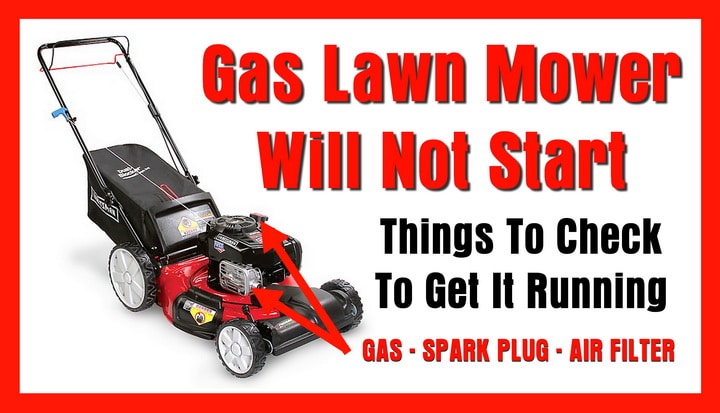
Safety and quick checks before you wrench
Work smart and safe. Remove the spark plug wire before you touch blades or the carb. Keep fuel away from sparks or flames. Wear eye and hand protection.
Try these fast checks if your briggs and stratton lawn mower will not start:
- Check fuel. If it smells sour or looks dark, drain it and add fresh fuel.
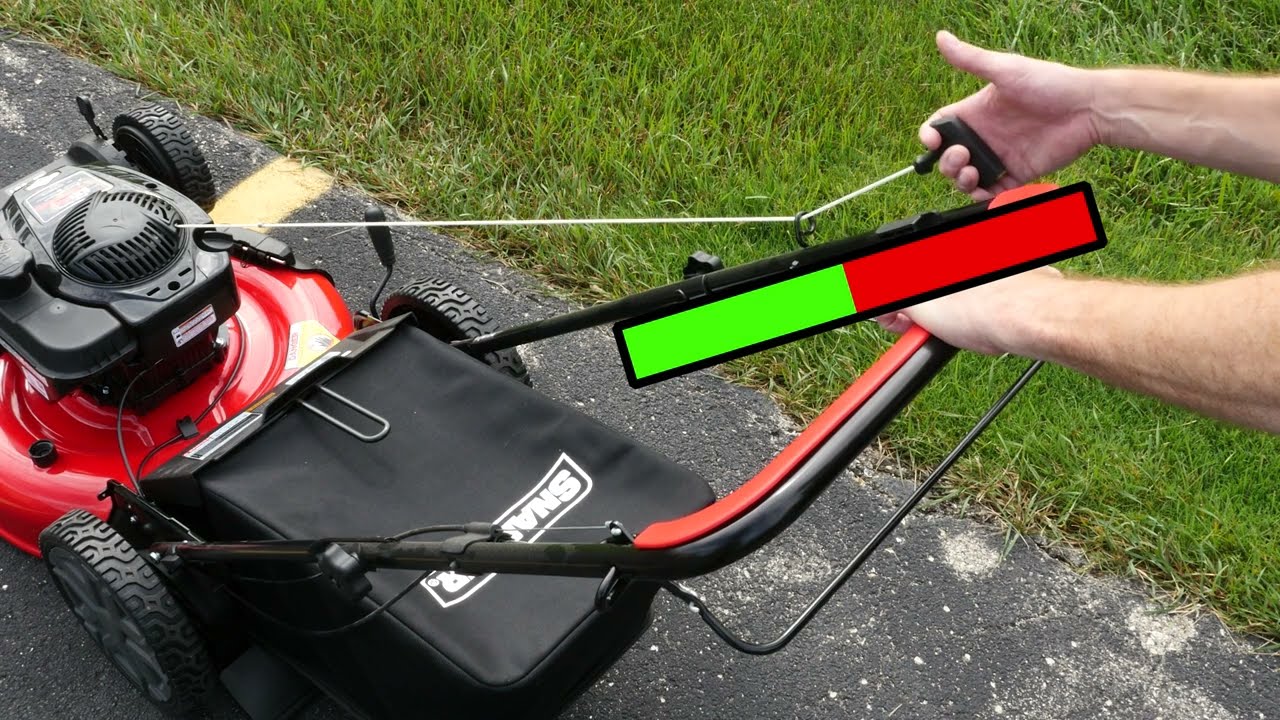
- Make sure the bail bar is held tight to the handle. This releases the engine brake.
- Set the throttle or choke to Start, if your model has it.
- Check the air filter. If it is soaked with oil or dirt, remove it and try a test start.
- Pull the starter. If it is very easy to pull, you may have low compression.
In my shop, 7 out of 10 no-starts are fuel related. The next most common cause is a bad or fouled spark plug.
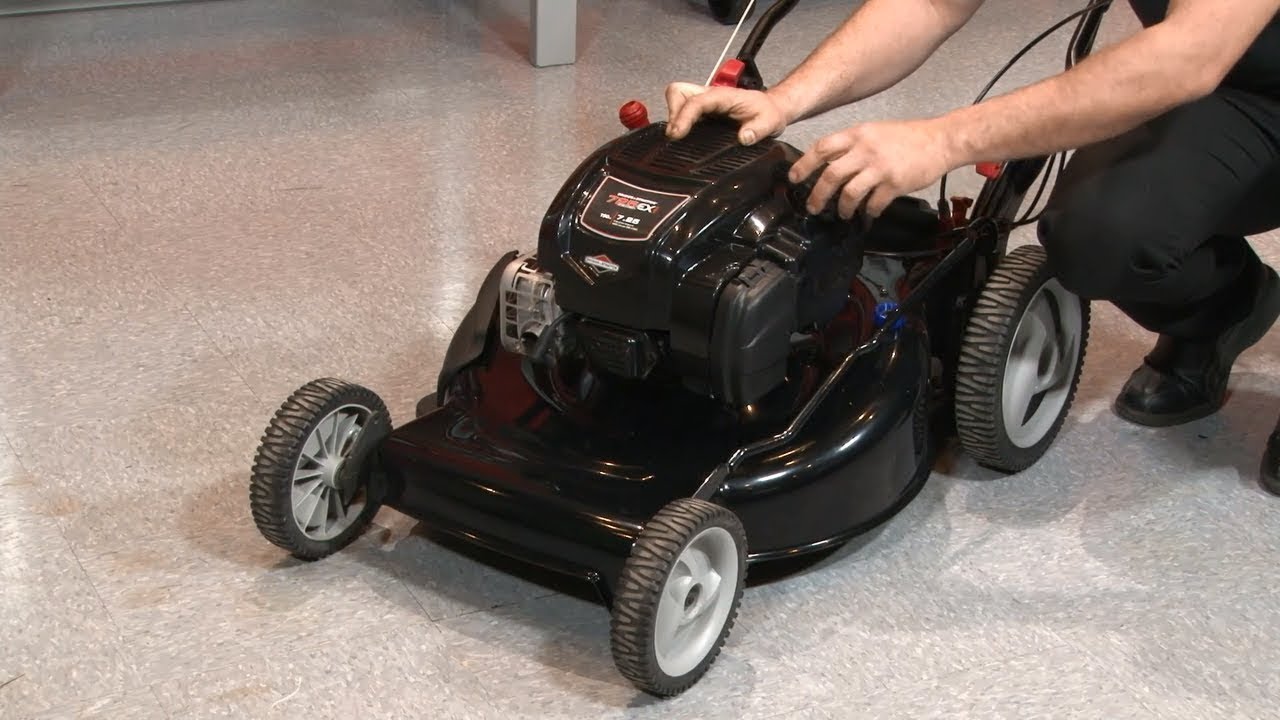
How a Briggs & Stratton small engine starts
It helps to know the basics. The engine needs four things. It needs fresh fuel, clean air, a strong spark at the right time, and enough compression.
When you pull the cord, the flywheel spins. A magnet on the flywheel fires the ignition coil, which makes the spark. The carburetor mixes fuel and air. A small valve system lets the engine breathe. If any part is weak, the engine will not light.
When a briggs and stratton lawn mower will not start, one of these four needs is missing. The steps below help you find which one.
Fuel fixes when a briggs and stratton lawn mower will not start
Old fuel is the top cause. Ethanol fuel can gum up jets in weeks. Fix the fuel first.
Do this:
- Drain the tank and the carburetor bowl. Catch fuel in a clear container.
- Add fresh 87–93 octane fuel. Use a stabilizer if fuel sits for more than 30 days.
- Inspect the carb bowl. If you see grit or gel, clean it with carb spray.
- Clear the main jet. Use a soft wire or a bristle. Do not enlarge the hole.
- Check the float and needle. Make sure they move free and seal well.
- Inspect the fuel cap vent. If the cap is clogged, the tank will not vent and starve the carb.
- If you have a primer bulb, make sure it is not cracked. Replace if it leaks.
- If your model has a fuel shutoff solenoid, click test it with the key on.
Tip from experience: if the engine runs for 2–10 seconds on a shot of carb spray, the ignition is fine. Your issue is fuel delivery.
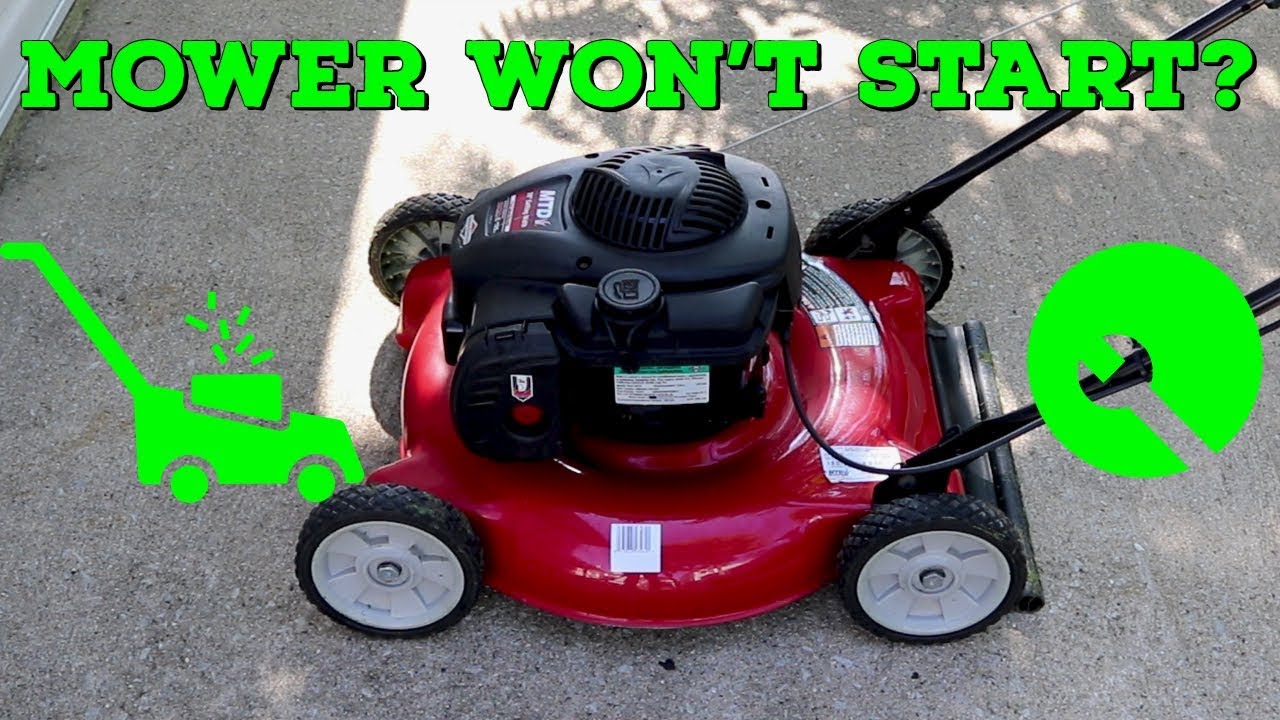
Air and spark: simple wins
Air must flow, and spark must be hot and on time. Start with the easy items.
Check air:
- Remove the air filter and try a start for a few seconds. If it fires now, replace the filter.
- Inspect the intake boot for cracks. Unmetered air can lean the mix and block starts.
Check spark:
- Pull the spark plug. If it is wet, dry or replace it. If it is black and sooty, replace it.
- Set the gap to 0.030 inch for most models. Use a gap tool for best results.
- Test spark with an inline tester. Bright, steady flashes mean good coil output.
If your briggs and stratton lawn mower will not start with a new plug and fresh fuel, look at the coil and flywheel key next.

Safety interlocks that block starts
Many mowers have safety switches. They can stop the engine from cranking or sparking.
Check these items:
- Blade control bar. The cable must pull the brake arm fully off the flywheel.
- Operator presence switch. If the bail bar switch fails, the coil will be grounded.
- On riders, check seat, brake, and blade switches. Sit on the seat, brake on, blades off.
- Shift to neutral or park. Some models will not crank in gear.
A briggs and stratton lawn mower will not start if any safety switch is open. You can test with a multimeter or use a continuity tester.

Battery, starter, and charging (electric start models)
If you hear a click but no crank, think battery or starter. If you hear nothing, think fuse or switch.
Do this:
- Measure battery voltage. You want 12.6 volts or more at rest.
- Load test the battery. It should hold above 9.6 volts while cranking.
- Check the ground strap and all cables. Clean and tighten them.
- Bypass the solenoid with a safe jump to test the starter.
- Inspect the starter gear and flywheel teeth for wear.
Note: a briggs and stratton lawn mower will not start if voltage is low. Charge the battery fully before more tests.

Compression and timing checks
Engines need compression. They also need correct timing. Impacts can change both.
Look for these signs:
- Very easy pull cord. That can mean a stuck open valve or worn rings.
- Popping through the carb. That can hint at a sheared flywheel key.
- Oil level too high. This can flood the cylinder and block starts.
Steps:
- Do a thumb test. Feel for strong pressure at the plug hole while cranking.
- For a gauge test, look for 60–90 psi on engines with auto-decompression.
- Remove the flywheel nut and inspect the key. Replace if it is half-moon sheared.
- Check valve lash on overhead valve models. Set lash to spec when cold.
If compression is low and the oil smells like gas, change the oil before you run the engine. A briggs and stratton lawn mower will not start or will run poorly when timing is off.

Deep clean and rebuild the carburetor
If cleaning the bowl and jet did not help, a full rebuild may. Varnish can hide in passages you cannot see.
Process I use:
- Remove the carb. Take pictures to remember link and spring positions.
- Strip all rubber parts. Soak the body in carb cleaner or use an ultrasonic bath.
- Blow out all passages with compressed air. Use eye protection.
- Install a new kit with gaskets, needle, and seat. Replace the float if fuel logged.
- Reassemble and set the governor linkage as before.
- Prime and test. Fine-tune idle mix if your model allows it.
A briggs and stratton lawn mower will not start if the idle or main circuit is blocked. A rebuild often restores like-new starts.
Storage, fuel choices, and ethanol tips
Bad storage leads to gummed carbs. Good storage keeps starts easy.
Use these habits:
- Buy fresh fuel. Use it within 30 days, or add stabilizer on day one.
- Run the carb dry before winter. Shut off the fuel valve and let it stall.
- Store the mower level. Avoid fuel leaking into the oil.
- Use ethanol-free fuel if you can. If not, use E10 with a top-tier stabilizer.
If your briggs and stratton lawn mower will not start after winter, suspect stale fuel and varnish first.
Model-specific notes that matter
Briggs & Stratton engines vary. Features differ by series.
Helpful points:
- ReadyStart models use auto-choke. Make sure the thermostat link moves with heat.
- Primer-bulb carbs need a good bulb seal. Replace cracked bulbs.
- Plastic Pulse-Jet carbs rely on a diaphragm. A hard diaphragm blocks fuel flow.
- Intek and OHV engines need correct valve lash. Set it each season for easy starts.
- Solenoid-equipped carbs need 12 volts to open. Listen for a click with key on.
When a briggs and stratton lawn mower will not start, matching fixes to your series speeds the repair.
Tools and parts that save time
You do not need a full shop to fix most no-starts. A small kit helps a lot.
Keep these on hand:
- Spark plug socket, gap tool, and torque wrench.
- Inline spark tester.
- Carb cleaner, compressed air, and a soft wire.
- Fuel line, clamps, and a shutoff valve.
- Multimeter and test light.
- Carb rebuild kit and air filter for your model.
With these tools, a briggs and stratton lawn mower will not start is a problem you can solve at home.
When to call a pro and what it may cost
Some issues need a bench and special tools. That is fine. Save your time and protect your engine.
Consider help when:
- Compression is low or the flywheel key keeps shearing.
- The carb body is warped or cracked.
- The starter, ring gear, or wiring harness is damaged.
- You suspect a blown head gasket.
Typical shop ranges:
- Carb clean and tune: low to mid cost.
- Carb rebuild with kit: mid cost.
- Coil or flywheel key: low to mid cost.
- Head gasket or valve work: mid to higher cost.
If your briggs and stratton lawn mower will not start after all basic steps, a pro check can be cheaper than guesswork.
Maintenance schedule to prevent no-starts
Simple care stops most headaches.
Follow this plan:
- After every use: brush off grass and check for leaks.
- Every 25 hours: change oil and clean or replace the air filter.
- Every season: new spark plug, fresh fuel, and valve lash check on OHV models.
- Before storage: stabilize fuel, run dry, and fog the cylinder if stored long term.
Stick to this, and the odds that your briggs and stratton lawn mower will not start drop a lot.
Frequently Asked Questions of briggs and stratton lawn mower will not start
Why does my Briggs & Stratton start and die after a few seconds?
That points to a fuel delivery issue. Clean the main jet, drain old fuel, and check the cap vent.
How can I tell if the flywheel key is sheared?
The rope may pull normal, but it backfires or pops through the carb. Remove the flywheel nut and inspect the key for offset or damage.
What spark plug does a Briggs & Stratton mower use?
Most walk-behinds use a standard small-engine plug like RJ19LM or equivalent. Check your engine model for the exact part and gap to 0.030 inch.
My electric start clicks but does not crank. What should I check?
Test battery voltage and cable connections first. If voltage is good, test the solenoid and starter draw.
Can bad oil cause a no-start?
If oil is overfilled or fuel-diluted, it can flood the cylinder. Set oil to the correct level and replace fuel-soaked oil before starting.
Is ethanol-free fuel worth it for easier starts?
Yes, it reduces varnish and phase separation. It helps carbs stay clean during storage.
What does the primer bulb do?
It pushes fuel into the carb for cold starts. If it is cracked or leaks, you may get no prime and no start.
Conclusion
Most no-starts come down to fuel, air, spark, or compression. Start simple. Use fresh fuel, a clean filter, and a good plug. Check safety switches and the flywheel key if you hit something. With a calm plan, even a stubborn engine will fire.
Use the steps here today and get your mower back to work. If you found this helpful, share it, subscribe for more repair guides, or leave a comment with your model number and symptoms for tailored tips.