

No spark means issues with the plug, coil, safety switch, or wiring.
If you are not getting spark on lawn mower, you need a plan that works fast. I service small engines for a living, and I have solved this fault on every major brand. In this guide, I break down how ignition works, the most common failures, and how to test each part with simple tools. Follow along and you will know exactly what to do when you are not getting spark on lawn mower.
How a Lawn Mower Makes Spark
A small engine makes spark with a magnet and a coil. The flywheel has a magnet. As it spins past the ignition coil, it builds voltage. That voltage jumps the spark plug gap at the right time. If any link in this path fails, you get no spark.
Key parts in the ignition chain:
- Spark plug makes the spark jump the gap.
- Ignition coil or armature builds high voltage.
- Flywheel magnet triggers the coil.
- Kill switch or safety interlock grounds the coil to stop the engine.
- Plug wire and boot deliver the spark to the plug.
When you are not getting spark on lawn mower, one or more of these is bad or shorted.
Safety, Tools, and Prep
Work safe. The blade can cut. The engine can fire. Fuel can burn.
Do this first:
- Remove the spark plug wire when you work near the blade.
- Disable the mower by removing the ignition key on riders.
- Work in open air. Keep fuel away from sparks.
Helpful tools:
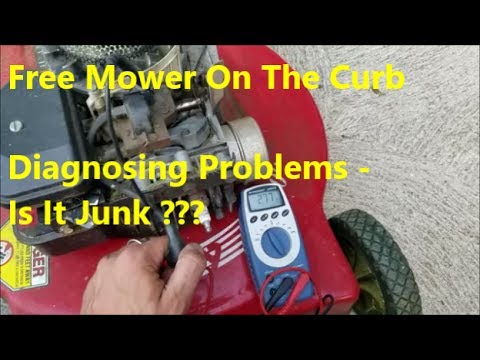
- Inline spark tester shows spark under load.
- Multimeter checks resistance and continuity.
- Feeler gauge sets coil air gap.
- Small wire brush cleans grounds and plugs.
- Known-good spark plug for quick swaps.
These tools speed up every test when you are not getting spark on lawn mower.

Step-by-Step Diagnosis When Not Getting Spark on Lawn Mower
Use this simple flow. It works on push mowers and riders.
- Confirm the symptom
- Fit an inline spark tester between the plug wire and the plug.
- Pull the starter or crank the engine.
- No flash means no spark.
- Try a known-good plug
- Swap in a fresh, correct plug.
- Test again.
- If you now see spark, the old plug was bad.
- Check the kill circuit
- Unplug the small kill wire from the coil.
- Test for spark again.
- If spark returns, a switch or interlock is shorted.
- Inspect the coil and air gap
- Remove the blower housing.
- Clean rust on the flywheel magnet and coil legs.
- Set air gap to the spec. Many coils use 0.010–0.014 inch.
- Test again.
- Inspect plug wire and boot
- Look for cuts, cracks, or green corrosion.
- Push the boot on tight until it clicks.
- Replace the wire if the conductor breaks.
- Check safety interlocks on riders
- Seat, blade, brake, and neutral switches must be in the right state.
- Wiggle harness plugs while cranking.
- Use a multimeter to confirm continuity.
- Test the coil
- Many coils have a primary resistance near zero ohms and a high secondary value.
- Specs vary by model. Check your manual.
- If you have no spark with the kill wire removed and the gap set right, replace the coil.
- Check the flywheel key if timing seems off
- Backfires and weak or no spark under load can mean a sheared key.
- Pull the flywheel and inspect the soft key.
- Replace if damaged and torque the nut to spec.
- For battery ignition on some riders
- Weak battery or slow cranking can reduce spark.
- Charge the battery and test again.
Repeat a spark test after each change. This step-by-step path fixes most cases of not getting spark on lawn mower without guesswork.

Common Causes and Reliable Fixes
Worn or fouled spark plug
A cracked insulator or carbon fouling kills spark. Replace with the exact heat range. Set gap per the manual. Keep a spare to test fast when you are not getting spark on lawn mower.
Shorted kill switch or safety interlock
If the kill lead grounds the coil, you get no spark. Disconnect the small coil wire and test again. Trace the harness. Replace any stuck switch.
Bad ignition coil or armature
Heat and age break down windings. Clean the coil legs and flywheel. Set the air gap. If still dead with the kill lead off, install a new coil.
Rusty flywheel magnet or wrong air gap
Rust reduces field strength. Clean with fine sandpaper. Set a proper gap using a feeler gauge. A business card is often close, but a gauge is better.
Damaged plug wire or loose boot
Cracks leak voltage to ground. Push the boot on firm. If the wire pulls out of the coil, replace the coil.
CDI or electronic module failure
Some engines use a separate module. Heat kills them over time. If all else checks out, test or replace the module.
Battery, solenoid, and starter on riders
Slow cranking can weaken spark. Charge or replace the battery. Clean grounds. A good ground is vital.
Moisture and corrosion
Water under the shroud or wet plugs stop spark. Dry parts. Spray a light electrical cleaner on contacts. Reseat every connector.
Sheared flywheel key
A sudden stop can cut the soft key. Timing shifts, and spark fails to fire at the right time. Replace the key and torque the flywheel nut.
Aftermarket mismatch
Wrong plugs or cheap coils cause random no-spark. Use parts that match the model. This prevents repeat cases of not getting spark on lawn mower.

Real-World Fixes and Lessons I Learned
- The “mowed a rock” case: The mower hit a root and died. Cranked fine. No spark. The key had sheared. A new key and proper torque fixed it in minutes.
- The “wet garage” case: A push mower stored under a leaky roof had no spark. The coil legs were rusty. I cleaned the rust, set the gap, and it fired on the first pull.
- The “cheap plug” trap: A new bargain plug sparked on the bench but failed under compression. A name-brand plug solved a month of hard starts.
- The “hidden switch” on riders: A seat switch half latched would ground the coil. I taped the harness so the plug could not back out again.
When you face not getting spark on lawn mower, slow down and check the basics. A careful eye beats parts cannon repairs.
Preventive Care To Keep Spark Strong
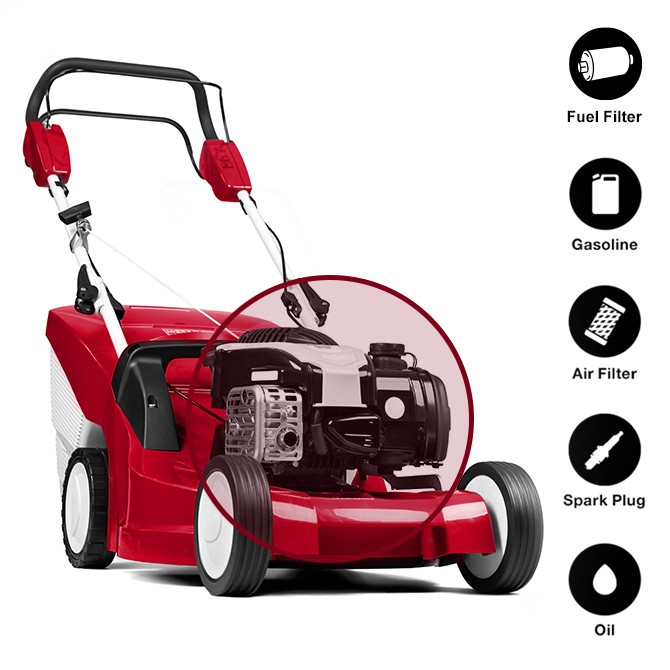
- Replace the spark plug every season or 25 hours.
- Clean the air filter so the engine does not run rich.
- Keep the flywheel area dry and clean.
- Inspect coil gap and wire routing after blade strikes.
- Use fresh fuel and run the carb dry before long storage.
- Keep battery posts clean on riders.
These simple steps prevent most cases of not getting spark on lawn mower next spring.
Costs, Parts, and When to Repair
- Spark plug: low cost and the first thing to try.
- Inline tester and feeler gauge: small one-time buys that pay for themselves.
- Coil or armature: moderate cost. Many DIYers can install it.
- Flywheel key: very low cost, but needs a puller and care.
Repair makes sense if the deck and engine are sound. Replace the mower if you face many high-cost failures at once. Use OEM or high-quality parts. They cut repeat cases of not getting spark on lawn mower.
Quick Troubleshooting Checklist
- Use an inline spark tester for each test.
- Try a known-good plug.
- Disconnect the kill wire at the coil.
- Clean flywheel magnet and coil legs.
- Set the coil gap to spec.
- Check plug wire and boot.
- Verify safety switches and grounds.
- Inspect the flywheel key after hard impacts.
Print this list. It solves almost every case of not getting spark on lawn mower.
Frequently Asked Questions of not getting spark on lawn mower
Why does my mower have no spark after hitting something?
The flywheel key may have sheared and changed timing. Check and replace the key, then torque the flywheel nut to spec.
Can a bad coil work when cold and fail when hot?
Yes. Coils can break down with heat. If spark vanishes as the engine warms, replace the coil.
How do I know if the kill switch is the problem?
Unplug the small kill wire from the coil and test for spark. If spark returns, trace the switch and safety circuit for a short.
Will a weak battery cause no spark?
On most magneto systems, no. But riders that rely on battery-fed ignition need a charged battery and good cranking speed.
What spark plug gap should I use?
Follow the engine manual. Many walk-behind mowers use gaps around 0.020–0.030 inch, but specs vary by brand and model.
Do I need a special tester to check spark?
An inline spark tester is best because it shows spark under compression. It is cheap and more reliable than holding the plug to metal.
Could fuel issues look like no spark?
Yes. A flooded engine wets the plug and looks like no spark. Dry the plug, open the throttle, and test again to confirm.
Conclusion
You can fix no-spark faults with a clear plan and simple tools. Confirm the symptom, isolate the kill circuit, clean and set the coil, and test with a known-good plug. If needed, replace the coil or key, and button up the safety system.
Take the checklist to your shed and follow it step by step. You will solve not getting spark on lawn mower faster, spend less, and learn more with each fix. Want more guides like this? Subscribe, share your results, or ask a question in the comments.