

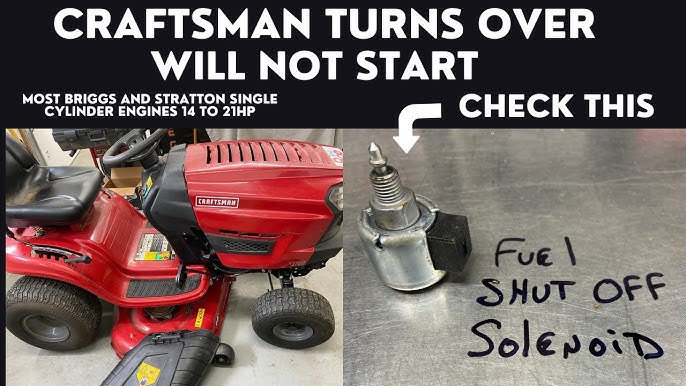
Most times a Craftsman lawn mower will not turn over due to a weak battery, bad connections, or a faulty safety switch.
If your Craftsman lawn mower will not turn over, you are not alone. I service these machines often and see the same root causes repeat. In this guide, I explain how the system works, how to test each part, and how to fix the issue fast. Follow along and you will know what to check, what to replace, and when to call a pro.

Source: reddit.com
Safety First and Quick Checks
Before any test, pull the key and remove the spark plug wire. Set the brake. Block the wheels. Keep hands clear of blades. Use gloves and eye wear.
Start with simple issues:
- Is the battery charged and the charger working?
- Are the battery posts tight and clean?
- Is the seat switch plugged in and not damaged?
- Is the brake pedal fully down?
- Is the blade switch or PTO set to off?
If a craftsman lawn mower will not turn over, these quick checks solve many calls. I have fixed many “dead” riders by only cleaning posts and seating the brake.
How the Starting System Works
The start chain is simple. The key switch sends power to a fuse, then a safety switch loop, then the solenoid, then the starter. The starter spins the flywheel. That turns the crank. If any link fails, the engine will not crank.
Key parts:
- Battery and cables supply power.
- Ignition switch routes power.
- Safety switches break power if not safe.
- Fuse protects the circuit.
- Solenoid is the high amp relay.
- Starter motor turns the engine.
- Ground points complete the loop.
If a craftsman lawn mower will not turn over, one or more of these parts is open, weak, or stuck.

Step-by-Step Troubleshooting When a Craftsman Lawn Mower Will Not Turn Over
Use a basic plan. Move from easy checks to deep tests. A $15 test light or meter helps a lot. So does a set of jump leads.
Step 1: Confirm the symptom
Turn the key to start and note what happens.
- No sound at all points to battery, fuse, switch, or safety loop.
- A click points to the solenoid or a weak battery.
- A slow drag points to low volts, corrosion, or a failing starter.
When a craftsman lawn mower will not turn over and makes no sound, think power path first.
Step 2: Battery test and cables
Charge the battery till full. A healthy 12V battery should read 12.6V at rest. While cranking, it should stay above 9.6V.
- Clean posts till shiny. Tighten clamps so they do not twist.
- Check the ground cable where it bolts to the frame or engine. Clean that spot too.
- Wiggle-test the cables while trying to crank.
Many times a craftsman lawn mower will not turn over due to hidden green corrosion under the cable jacket.
Step 3: Fuse and key switch
Find the main fuse holder near the battery or harness. Pull and inspect.
- Replace any blown fuse with the same amp rating.
- Turn the key to start and use a test light at the “S” wire from the switch. You should see power there.
- If no power, the switch or its plug may be bad.
I have seen melted switch plugs on hot days. A new pigtail and switch fixed it fast.
Step 4: Safety switches and interlocks
Seat, brake, and blade switches must all agree. If one is open, no crank.
- Sit on the seat, set brake, and turn blades off.
- Check each switch plug for loose pins.
- Use a test light to see if power passes through the loop when you hold the brake and try to start.
If a craftsman lawn mower will not turn over unless you bounce on the seat, the seat switch may be worn.
Step 5: Solenoid test
The solenoid has two big lugs and one or two small trigger tabs.
- With the key in start, the small tab should get 12V.
- If it does and there is still no crank, bridge the two big lugs with an insulated tool for one second. Sparks are normal. If the starter now spins, the solenoid is bad.
When a craftsman lawn mower will not turn over but you hear a click, the solenoid is a top suspect.
Step 6: Starter motor and bendix
If power reaches the starter but it does not spin, bench test it.
- Remove the starter. Clamp it in a vise. Jump 12V to the post and ground the case.
- If it spins slow or not at all, replace or rebuild it.
I once found a starter full of grass seed. A simple clean brought it back to life.
Step 7: Engine drag, seized parts, or hydrolock
Pull the spark plug and try to turn the engine by hand at the screen or with a socket on the flywheel nut.
- If it will not move, check the deck. A jammed blade or bent pulley can lock the system.
- If fuel sprays from the plug hole, the engine is hydrolocked. The carb float stuck open. Drain fuel from the cylinder, change the oil, fix the carb needle, and try again.
If a craftsman lawn mower will not turn over and the oil smells like gas, stop and correct the fuel leak first.
Step 8: Voltage drop and grounds
A circuit can show 12V but still fail under load.
- Put the meter on volts. Probe from the battery positive to the starter post while cranking. Over 0.5V drop means high resistance.
- Do the same on the ground side from the starter case to battery negative.
If a craftsman lawn mower will not turn over only when hot, heat may raise resistance at a weak crimp or ground.
Step 9: Push mowers with electric start
Some Craftsman walk mowers have a small 12V or 20V pack.
- Check the pack charge and the charger.
- Inspect the small solenoid and the start button.
- The same rules apply: battery, switch, safety, solenoid, starter, and ground.
When a craftsman lawn mower will not turn over on a walk mower, the tiny battery is often the cause.

Fixes and Costs: What to Repair or Replace
Here are common fixes I perform and what to expect.
- Clean and tighten battery and grounds. Cost is low. Time is 15 minutes.
- Replace a dead battery. Expect to pay modest cost. Time is 10 minutes.
- Swap a bad fuse or fuse holder. Very cheap. Time is 5–15 minutes.
- Replace a seat, brake, or PTO switch. Low to mid cost. Time is 20–40 minutes.
- Install a new solenoid. Low cost. Time is 15–30 minutes.
- Replace or rebuild a starter. Mid cost. Time is 30–60 minutes.
- Correct hydrolock and fix the carb float. Low to mid cost. Time is 45–90 minutes.
- Free a jammed deck or bent pulley. Low cost unless parts are bent.
If a craftsman lawn mower will not turn over and the starter and solenoid both test bad, replace the solenoid first. It is cheaper and fails more often in my shop data.
Preventive Maintenance Checklist
Small steps stop no-crank faults before they start.
- Charge and test the battery at season start and end.
- Clean posts, grounds, and frame bonds two times a year.
- Keep the deck clean to reduce drag at start.
- Store with a battery maintainer in the off season.
- Replace worn switches at the first sign of trouble.
- Inspect wiring looms for rub points and tape them.
If a craftsman lawn mower will not turn over after winter, storage was the root cause. A maintainer and a quick spring check fix that risk.

When to Call a Pro and What to Ask
Call a pro when you see melted wires, a starter that smokes, or a crank that will not turn by hand. Those can point to deeper faults.
Ask clear questions:
- What is the test plan, and what did each test show?
- Is the battery load-tested, not just charged?
- Are grounds ohmed and cleaned?
- What parts are new and what are reused?
- What warranty covers the fix?
If a craftsman lawn mower will not turn over after you replaced the battery and solenoid, a shop can trace voltage drop under load and save time.

Frequently Asked Questions of craftsman lawn mower will not turn over
Why does my mower only click when I turn the key?
A single click points to a weak battery or a bad solenoid. Check battery voltage under load, then test the solenoid trigger and output.
Can bad gas make the engine not turn over?
Bad gas can flood the cylinder and cause hydrolock. Pull the plug, spin the engine, change the oil, and fix the carb float.
How do I know if the starter is bad?
Feed 12V direct to the starter off the mower. If it spins weak or not at all, the starter needs repair or swap.
Where is the fuse on my Craftsman rider?
It is often near the battery or under the seat in a small holder. Trace the red wire from the battery or switch to find it.
Do safety switches really stop cranking?
Yes. Seat, brake, and PTO switches are in series with the start circuit. If any one is open, the solenoid will not get power.
What size battery does my Craftsman riding mower need?
Most use a 12V lawn and garden battery with the right terminal layout. Check your model tag or manual to match the size and cold cranking amps.
Can a bad ground stop the mower from turning over?
Yes. A loose or rusty ground can drop most of the voltage. Clean the frame bond and engine ground for a strong path.
Conclusion
A no-crank issue is a chain problem, not a guess game. Check power in, check safety loops, test the solenoid, then the starter, then look for engine drag. Use a meter, take notes, and fix the real link that failed. Start today with clean posts, a good ground, and a load test. If you need more help, drop a comment, subscribe for more guides, or explore our related mower repair resources.