

A lawn mower not starting after winter often has stale fuel or weak spark.
If you are facing a lawn mower not starting after winter, you are not alone. I service dozens every spring, and the fix is often simple once you follow a clear plan. In this guide, I share proven steps, expert tips, and mistakes to avoid. You will learn exactly how to diagnose, repair, and prevent a lawn mower not starting after winter, with plain steps and reliable advice.

Why your mower fails after cold storage
Cold months are hard on small engines. Fuel goes bad, batteries lose charge, and moisture causes corrosion. Cables seize. Carburetors varnish and jets clog. A lawn mower not starting after winter is usually the result of one or more of these common issues.

The usual suspects
- Stale fuel: Gasoline oxidizes in 1 to 3 months. Ethanol blends pull in water. Varnish clogs jets.
- Weak spark: Old plugs, corroded coil contacts, or damaged plug boots reduce ignition.
- Flooded engine: Too much priming or choking wets the plug and kills spark.
- Dirty air filter: Winter critters or dust choke airflow and make the mix rich.
- Gummed carburetor: A stuck float needle or main jet starves the engine.
- Dead battery: Electric start mowers lose charge and sulfation builds on plates.
- Safety switches: Bail bar, seat, blade, or neutral switches can block ignition.
- Viscous oil: Thick, old oil slows cranking and stresses the starter.
- Moisture and rust: Condensation pits the tank, lines, and carb passages.
From my bench notes, fresh fuel and a cleaned carb fix most machines. The next most common fixes are a new spark plug and a charged battery.
Safety first: check before you wrench
Before you start, make the area safe and the task clean. Small engines spark and fuel is flammable. Treat them with care.
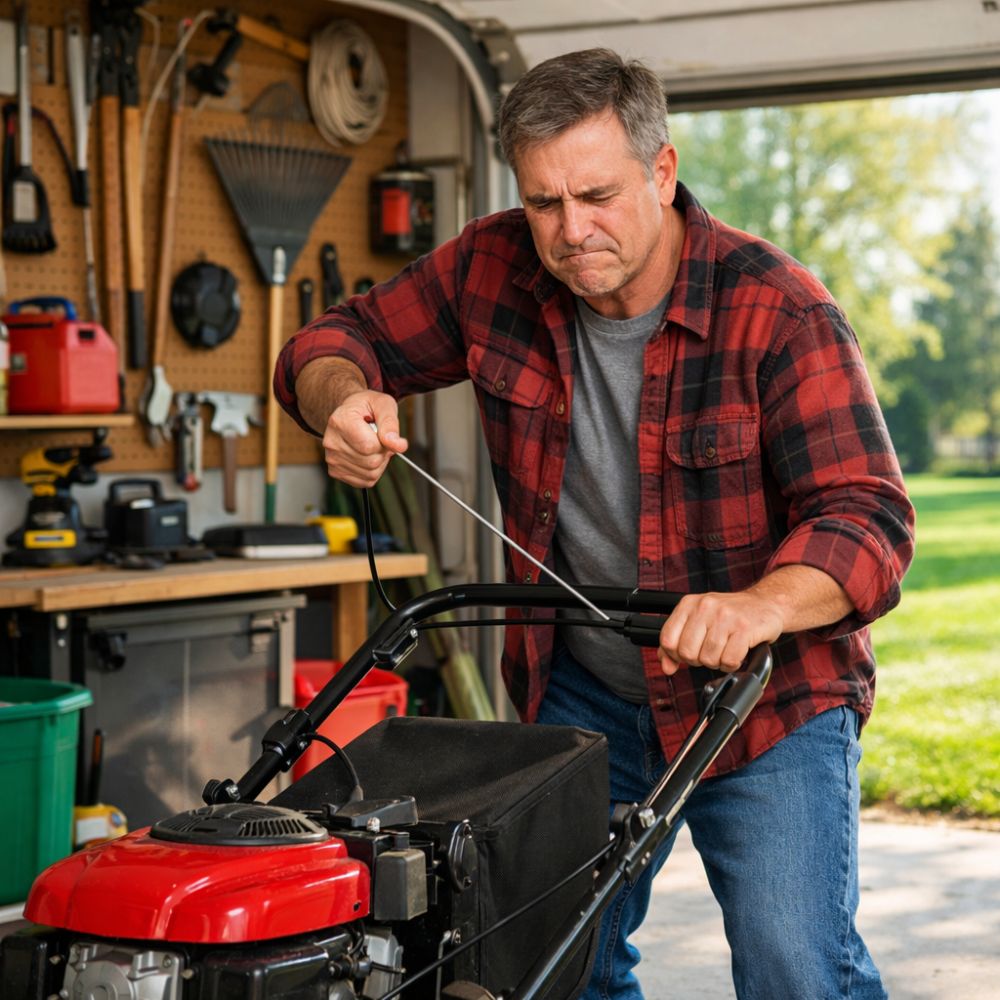
- Work outdoors or in a well-vented space. Keep a fire extinguisher close.
- Remove the spark plug wire before touching the blade.
- For electric mowers, pull the key and battery. Unplug corded units.
- Let the engine cool. Wipe fuel spills at once.
- Wear gloves and eye protection.
Step-by-step troubleshooting checklist
Use this flow to isolate the fault. It saves time and avoids guesswork. It also covers the most likely causes of a lawn mower not starting after winter in the right order.

1) Quick checks
- Confirm fresh fuel: Use new gas less than 30 days old. Avoid high ethanol blends.
- Prime and choke per the manual: Too little or too much makes a big change.
- Test the bail bar: Hold it tight. Broken cables stop the ignition.
- Inspect the air filter: If it is soaked, torn, or packed, replace it.
2) Spark test
- Remove the spark plug. Connect the lead. Ground the threads to bare metal.
- Pull the cord. Look for a blue, snappy spark. Orange or no spark means trouble.
- If no spark, fit a new plug. Re-test. If still no spark, check the coil and kill switch wire.
3) Fuel delivery test
- Spray a small burst of carb cleaner into the carb throat.
- Try to start. If the engine fires then dies, fuel is not flowing.
- Inspect the fuel line, filter, and tank cap vent. Replace cracked lines.
4) Carburetor and choke
- Check the choke plate. It must close for a cold start and open after.
- Verify the primer bulb is not cracked. Replace if it fails to pump fuel.
- Tap the carb bowl lightly. A stuck float needle can free up.
5) Battery and starter (for electric start)
- Measure battery voltage. Healthy is about 12.6 volts at rest.
- Charge fully, then load test. Replace if it cannot hold charge.
- If the starter clicks but does not spin, inspect the solenoid and ground.
6) Compression and mechanical
- Pull the cord. Feel for steady resistance. No resistance hints at valve or ring issues.
- Check the blade. A bent or jammed blade locks the crank.
- Listen for metallic scraping. Stop and seek service if you hear it.
Fixes for the most common problems
These are the repairs I do most often for a lawn mower not starting after winter. They are practical, proven, and safe when done with care.

Stale fuel and varnish
- Drain the tank and carb bowl. Use a hand pump or siphon.
- Refill with fresh fuel. Add a quality stabilizer if you store gas.
- If it still will not run, remove the carb. Clean jets and passages with carb cleaner and compressed air. Replace the bowl gasket if it swells.
Tip from the shop: Never poke jets with steel wire. Use soft copper strand or carb spray to avoid damage.
Flooded engine
- Turn fuel off if you have a shutoff. Hold the throttle open.
- Remove and dry the spark plug. Pull the rope 10 times to clear the cylinder.
- Refit the plug. Try again with no prime for the first few pulls.
Dirty or soaked air filter
- Foam filters: Wash with warm soapy water. Dry fully. Oil very lightly and squeeze out excess.
- Paper filters: Do not wash. Tap out dust or replace if stained or damp.
Weak spark or bad plug
- Replace the plug with the exact heat range and gap.
- Inspect the coil air gap to the flywheel. Set the gap with a business card if needed.
- Check the kill switch wire for rub-through and ground faults.
Stuck cables and safety switches
- Lubricate the bail cable with light oil. Replace frayed cables.
- Confirm the blade control and seat switches click and move free.
- Trace the harness for damage if the engine has no spark and switches are suspect.
Water in fuel
- Look for beaded droplets in the tank or bowl.
- Drain fully and refill with fresh gas. Ethanol can pull in water, which sinks and stalls the engine.
Oil and maintenance reset
- Change the oil if it smells like gas or is very dark.
- Fit a new air filter and plug at the start of each season.
- Sharpen and balance the blade to reduce crank stress.
Electric and battery mower notes
A lawn mower not starting after winter is not just a gas problem. Battery and corded mowers also act up after storage.

- Recharge and condition: Lithium packs need a full, slow charge after long rest. Wake them up indoors at room temp.
- Contact care: Clean battery rails and terminals with a dry cloth. Avoid sprays on pack contacts.
- Safety keys and switches: Many models will not arm without the key seated. Check for debris in the key slot.
- Thermal limits: Cold packs sag in voltage. Warm to room temp before load.
- Corded units: Test outlets and GFCI. Try a different heavy-gauge extension cord.
If the motor twitches then stops, the control board may detect overcurrent. Check for a jammed blade and packed grass under the deck.
Preventive maintenance and winterization
Prevention is the cheapest fix for a lawn mower not starting after winter. Build these habits into your fall routine and spring startup.
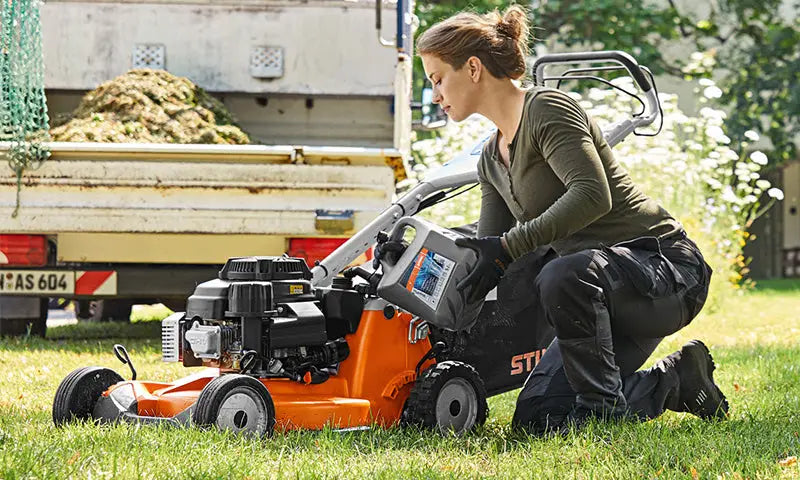
- Run the carb dry: Close the fuel valve and let the engine stop. If no valve, drain the bowl.
- Treat fuel: Add stabilizer to fresh gas. Store gas in sealed, approved cans.
- Change oil before storage: Acids in dirty oil corrode parts over winter.
- Store clean and dry: Remove grass from deck and shroud. Moist clumps invite rust and mice.
- Battery care: Charge once a month or use a smart maintainer.
- Plug and filter: Install a new spark plug and air filter each spring.
- Blade and hardware: Remove, sharpen, and balance the blade. Torque to spec.
- Cover smart: Use a breathable cover. Avoid sealed plastic that traps moisture.
Tools and supplies you will be glad to have
Having the right kit turns a lawn mower not starting after winter into a simple task.

- Fresh gasoline and stabilizer
- Spark plug wrench, feeler gauge, and a new spark plug
- Carb cleaner, small brush, and compressed air
- Siphon pump and drain pan
- Screwdrivers and nut drivers
- Fuel line, clamps, and an inline filter
- Battery charger or maintainer and a voltmeter
- Gloves, eye protection, rags, and a fire extinguisher
When to call a pro and what it may cost
Most no-start issues are simple. But some problems need a trained hand. Know when to stop and get help.

- Call a pro if you see fuel leaks from the carb body, cracked tanks, or rusty frames.
- Seek service for no compression, broken pull cords inside the shroud, stuck valves, or rod knock.
- Expect costs to vary by region and brand. Basic tune-ups are often modest. Carb overhauls and electrical work can cost more. Repairs on premium models may justify the investment.
If the mower is very old and needs many parts, compare repair costs to a new, efficient model.
Frequently Asked Questions of lawn mower not starting after winter
Why is my lawn mower not starting after winter even with fresh gas?
Old varnish may still block the carb jets. Clean the carburetor and replace the plug to restore a strong spark.
How long before gas goes bad in a mower?
Unstabilized gas can degrade in 1 to 3 months. Use fresh fuel with stabilizer to extend life and reduce deposits.
Should I drain the tank before winter?
Yes, or run the engine dry with a fuel shutoff. This helps prevent varnish and keeps the float needle from sticking.
How do I know if the engine is flooded?
You will smell raw fuel, and the plug will be wet. Let it air out, dry the plug, and try again with no priming.
Can a bad battery cause no-start on a pull-start mower?
It will not stop a pure pull-start ignition. But on electric-start models, a weak battery slows cranking and can hide other faults.
What spark plug should I use?
Match the part number and heat range in your manual. Set the gap to spec to ensure a hot, clean spark.
Is ethanol gas bad for small engines?
E10 is common and works if fresh. The problem is stale fuel and moisture, not ethanol itself, so use stabilizer and rotate stock.
Conclusion
A lawn mower not starting after winter is frustrating, but the root causes are simple. Fresh fuel, clean air, strong spark, and a free-flowing carb are the keys. Follow the safety checks, run the step-by-step tests, and address the most likely faults first. Most owners can fix the issue in under an hour with basic tools.
Take action today. Refresh the fuel, clean the filter, and test for spark. Then build a smart storage routine so next spring your first pull is your last. If you found this helpful, subscribe for more small engine guides or share your own fix in the comments.