

A lawn mower pull cord not retracting is usually caused by a dirty pulley, weak spring, or tangled rope.
You tug. It sticks. The engine will not crank. If you are dealing with a lawn mower pull cord not retracting, you are in the right spot. I work with recoil starters often and see the same failures repeat. This guide explains why it happens, how to fix it step by step, and how to stop it from coming back.
How a Recoil Starter Works
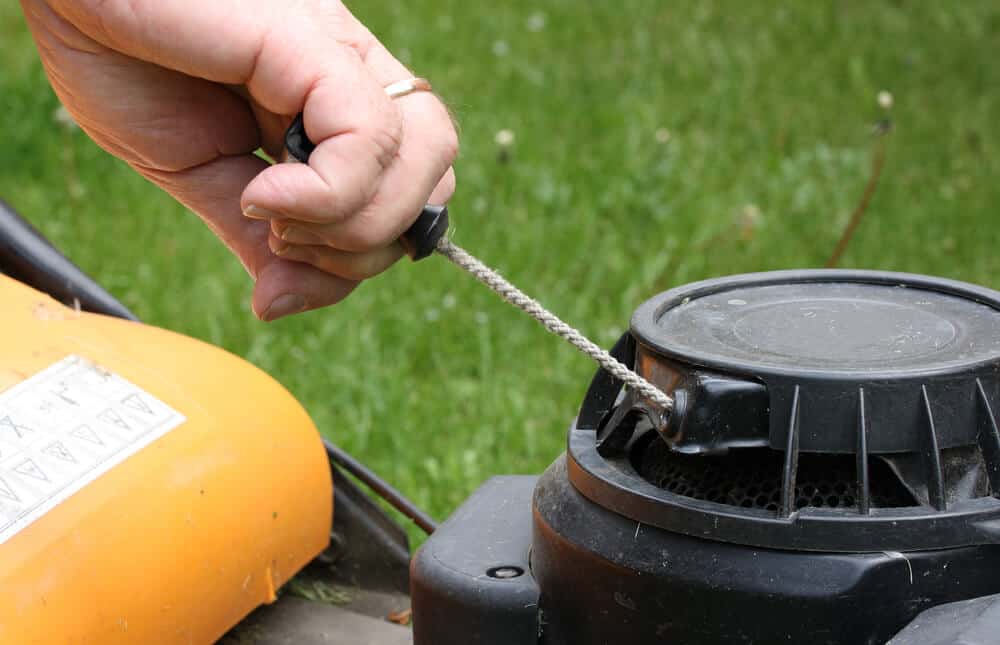
A recoil starter turns engine rotation into a smooth pull-and-return motion. The starter rope wraps around a pulley under the top shroud. When you pull, pawls engage the flywheel cup and spin the crankshaft. A flat steel recoil spring stores energy and then pulls the rope back in.
Think of it like a tape measure that snaps back. When dirt, rust, or a bad spring gets in the way, the rope hangs out. That is when you see a lawn mower pull cord not retracting.
Key parts you will touch:
- Starter rope and handle
- Pulley and rope guide
- Recoil or rewind spring
- Pawls and pawl springs
- Flywheel starter cup
- Shroud and mounting screws

Common Causes of a Lawn Mower Pull Cord Not Retracting
The same few faults cover most cases:
- Rope jam or knot. Frayed ends or a swollen knot can bind in the pulley eye.
- Weak or broken recoil spring. It loses snap or breaks, and the rope stays out.
- Dirty pulley track. Packed grass, grit, or plastic shavings stop smooth travel.
- Dry or rusty center post. The pulley drags and returns slow or not at all.
- Stuck pawls. Pawls can hang open and block the pulley.
- Wrong rope size or length. Too thick or too long overloads the spring.
- Shroud misalignment. The housing rubs the pulley or rope.
In my shop, the most common fault is dirt and a glazed pulley. Second is a tired spring. Both lead to a lawn mower pull cord not retracting.

Quick Checks Before You Take It Apart
Safety first. Pull the spark plug boot off. Wait for the engine to cool. Keep kids and pets away.
Now try these fast checks:
- Hold the mower vertical with the handle up. If it retracts then, the spring is weak.
- Tap the shroud with your palm and blow out debris. Light grit often frees a jam.
- Pull slow, then release slow. If it returns a bit and stops, suspect the pulley groove.
- Look at the rope. If it is fuzzy or swollen near the handle, it can wedge.
If these steps help even a little, you likely face dirt or a small jam, not a broken spring. This is classic for a lawn mower pull cord not retracting.

Step-by-Step Fix: Restore a Recoil That Will Not Return
Tools you may need:
- Screwdrivers and nut drivers
- Needle-nose pliers
- Utility knife
- Penetrating oil and dry lube
- New starter rope and a recoil spring, if needed
- Safety glasses and gloves
Follow these steps:
- Remove the shroud. Take out the top screws. Note screw lengths.
- Lift off the starter assembly. Keep it flat. The spring sits inside.
- Inspect the rope. If frayed, cut it off at the pulley and handle.
- Clean the pulley. Brush out grass and grit. Wipe the groove.
- Free the pawls. Add a drop of oil to the pawl pivots. They must snap back.
- Lube the center post. Use a dry silicone or PTFE. Avoid heavy grease.
- Check the recoil spring. If the pulley does not spin back with tension, the spring is weak or broken.
- Replace the spring if needed. Wear eye protection. Most springs come as a pre-wound cassette. Swap the cassette, or slowly nest the ribbon spring by hand.
- Install new rope. Use the size the maker lists. Common size is 3/16 inch (about 5 mm) for many walk-behinds. Feed the rope through the eye, tie a figure-eight or double overhand knot, and melt the tip.
- Preload the spring. Wind the pulley in the retract direction 4 to 7 turns. Hold it, feed the rope in, and let it retract slowly. Adjust turns so the rope seats without snapping.
- Refit the handle. Tie a secure knot. Make sure the rope does not bottom out under full pull.
- Reassemble and test. Refit the shroud. Pull several times. It should retract crisp and smooth.
Pro tip from field work: preload in small steps. Too much wind causes a harsh snap and early spring failure. This tip prevents repeat cases of a lawn mower pull cord not retracting.

Repair vs Replace: Cost, Time, and Parts
Most recoil issues are cheap to fix. A rope and handle kit costs little. A spring cassette is still modest. A full starter assembly costs more but saves time.
Choose replace if:
- The pulley is cracked or warped.
- The spring anchor is damaged.
- Pawls or posts are worn and stick again after cleaning.
Choose repair if:
- Only the rope is frayed.
- The spring still has good tension.
- Dirt or light rust is the main cause.
Time guide from real jobs:
- Rope swap: 10 to 20 minutes.
- Spring cassette: 20 to 30 minutes.
- Full assembly swap: 10 to 15 minutes.
This choice helps control cost while solving a lawn mower pull cord not retracting for good.
Preventive Care So the Pull Cord Always Snaps Back
Make recoil care part of seasonal service:
- Blow out the shroud after each mow. Dry debris is the enemy.
- Use dry lube on the center post once per season.
- Replace the rope at the first sign of fray.
- Store the mower dry. Moisture leads to rust and slow return.
- Pull the rope gently to full length once a month off-season. This keeps the spring free.
Simple habits stop most cases of a lawn mower pull cord not retracting and extend starter life.

Symptom-Based Troubleshooting
Match your symptom to likely causes and fixes:
- Rope will not go back at all. Broken spring, jammed knot, or stuck pawl. Inspect spring and clear jams.
- Rope returns very slow. Dirty pulley or dry post. Clean and use dry lube.
- Rope only retracts when mower is vertical. Weak spring. Replace or add one more preload turn.
- Rope snaps back too hard. Over-preloaded spring. Back off one turn.
- Rope pulls but engine does not catch. Pawls stuck or worn, or starter cup smooth. Clean or replace pawls or cup.
Use these quick reads when a lawn mower pull cord not retracting happens mid-season.
Brand-Specific Notes
Honda
- Their pawls use small springs that can gum up. Clean with solvent and use a drop of light oil.
- OEM rope size and length matter. Too thick binds in the guide.
Briggs & Stratton
- Many models use easy-to-swap spring cassettes. This makes spring work safer for beginners.
- Watch for cracked plastic pulleys on older units.
Toro and MTD
- Some decks flex the shroud when over-tightened. If the pulley rubs after reassembly, loosen, align, and retighten in a cross pattern.
- Check the rope guide eye. A sharp edge can fray the rope and cause repeat jams.
These notes come from repeat fixes in the field and help prevent a lawn mower pull cord not retracting after repair.
Frequently Asked Questions of lawn mower pull cord not retracting
Why does my pull cord stay out after one pull?
The recoil spring may be weak or broken, or the pulley is dirty. Clean the pulley and check spring tension before replacing parts.
Can I fix a recoil spring myself?
Yes, if it is a cassette-style spring and you wear eye protection. If it is a loose ribbon, take your time or buy a pre-wound unit.
What rope size should I use?
Most walk-behind mowers use about 3/16 inch rope. Follow your engine manual for exact diameter and length.
Why does the cord retract slow only when hot?
Heat expands parts and thins old grease into sticky film. Clean the pulley and use a dry, non-gumming lube.
Is WD-40 okay on the recoil?
Use it to free rust, then wipe off and switch to a dry lube. Wet oils attract dirt and can cause future sticking.
Do I need to remove the flywheel to fix this?
No, recoil work is on the shroud. You only touch the flywheel if the starter cup or pawls need service.
How many preloads should I give the spring?
Start with 4 to 5 turns. Test, then add or remove one turn so the cord retracts fully without snapping.
Conclusion
A rope that will not return is not bad luck. It is a small system with a few wear points. Clean the pulley, check the pawls, size the rope right, and set the spring preload. Most cases of a lawn mower pull cord not retracting end in under 30 minutes and stay fixed.
Take the next step now. Do the quick checks, gather a rope kit, and restore a smooth snap-back. If you found this guide helpful, subscribe for more small engine fixes or leave your repair result in the comments.