

Grow tasty herbs in pots with sun, good soil, and smart plant pairings.
If you have a sunny step, a balcony, or a kitchen window, you can grow a rich herb garden. I’ve spent years testing container gardening herbs ideas in tight city spaces and small patios. In this guide, you’ll get clear steps, pro tips, and creative designs that help herbs thrive in pots all year.
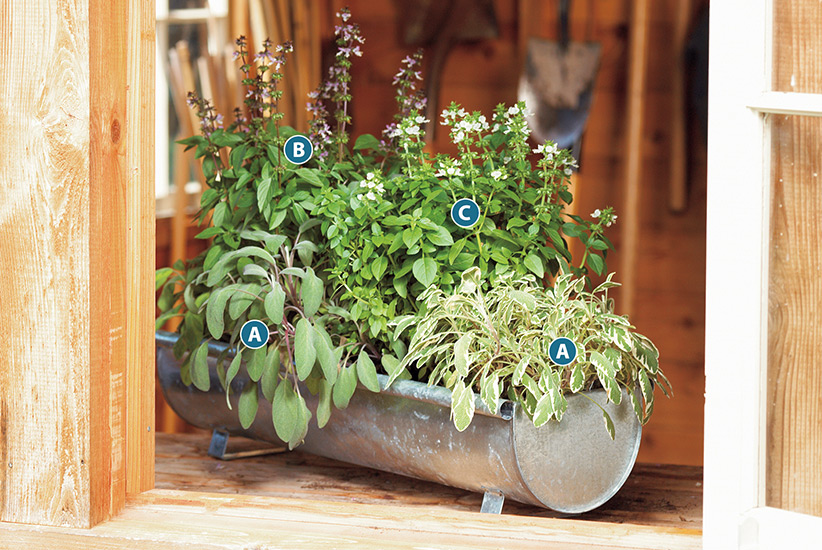
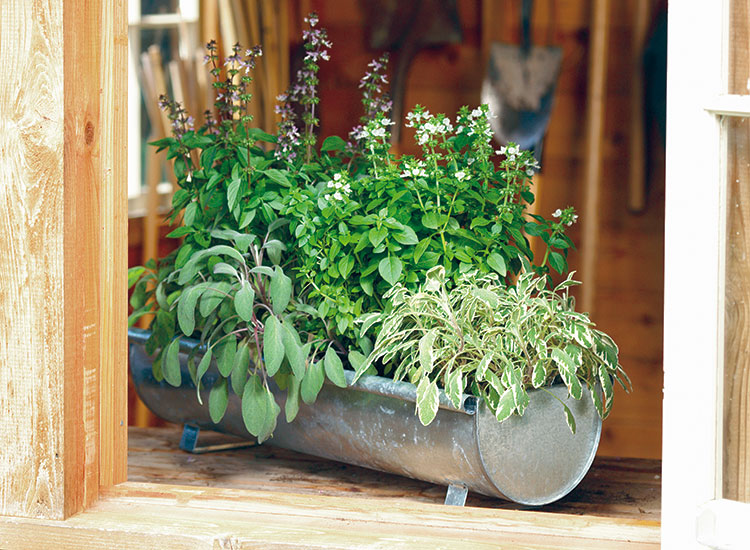
Choose the right containers
Pick pots with wide mouths and drainage holes. Herbs like air and space for roots. Go with at least 8–12 inches wide for single plants. Use 14–18 inches for mixed plantings.
- Terracotta breathes and prevents soggy roots. Water more in summer.
- Glazed clay and plastic hold water longer. Good for hot, dry spots.
- Grow bags are light, cool, and easy to store. Pick sturdy fabric.
- Self-watering planters reduce stress. Check that the soil still dries a bit between fills.
Match pot size to the herb. Basil, parsley, and cilantro like 10–12 inch pots. Rosemary, sage, and lavender need 14 inches or more. Mint spreads fast, so give it a dedicated container.
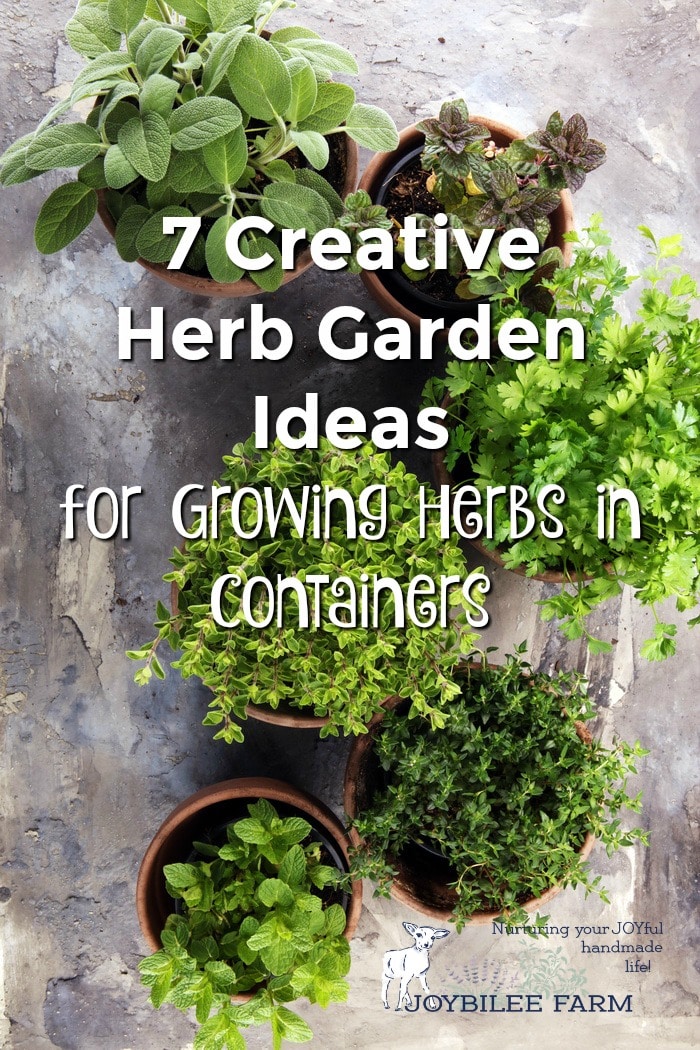
Best herbs for containers
Start with herbs that forgive small mistakes. Mix textures and scents to enjoy every day.
- Easy starters: Basil, chives, parsley, cilantro, mint.
- Sun lovers: Rosemary, thyme, oregano, sage, lavender.
- Heat tolerant: Thyme, oregano, rosemary, lemongrass.
- Cooler friendly: Cilantro, parsley, chives, mint.
- Indoors champs by a bright window: Basil, mint, chives, thyme.
Smart combos for one pot:
- Caprese pot: Basil with dwarf tomato and marigold. Stake the tomato.
- Pizza pot: Oregano, thyme, and dwarf rosemary.
- Tea pot: Mint, lemon balm, and chamomile in a wide bowl.
- Salsa pot: Cilantro, chives, and a compact chili pepper.
I grow a “workhorse” trio each season: basil, chives, and thyme. Basil adds punch, chives add zip, and thyme handles heat. These classic container gardening herbs ideas deliver flavor with low stress.
Soil, drainage, and feeding
Use a light, peat-free potting mix. Garden soil compacts in pots and can smother roots. A simple blend that works well is 60% potting mix, 20% perlite, and 20% compost. Aim for a fluffy feel that drains fast.
- Add a thin layer of gravel over drainage holes. Do not fill pots with rocks. Most roots want depth for air and water flow.
- Feed lightly. Mix a slow-release organic fertilizer into the top few inches at planting. Aim for a balanced number on the label.
- For leafy herbs like basil and parsley, add a light liquid feed every 2–3 weeks. Stop or slow feeding for woody herbs like rosemary and thyme.
Signs of trouble:
- Yellow leaves may mean too much water or low nitrogen.
- Weak growth may point to cramped roots. Repot to a bigger container.
Light, water, and climate tips
Most herbs need 6–8 hours of sun. Morning sun with some afternoon shade is ideal in hot zones. Indoors, use a south window or a full-spectrum LED for 12–14 hours.
- Water deep until you see drainage. Then let the top inch dry before the next soak.
- Use your finger as a meter. If it feels dry to the first knuckle, water.
- Mulch with fine bark or straw to keep soil cool and moist.
- Rotate pots each week for even growth. Move heat-stressed pots to light shade.
When heat spikes, I slide basil under a patio chair for two hours in the late day. That small move stops wilt and bitter leaves. Simple shifts like that shape great container gardening herbs ideas.
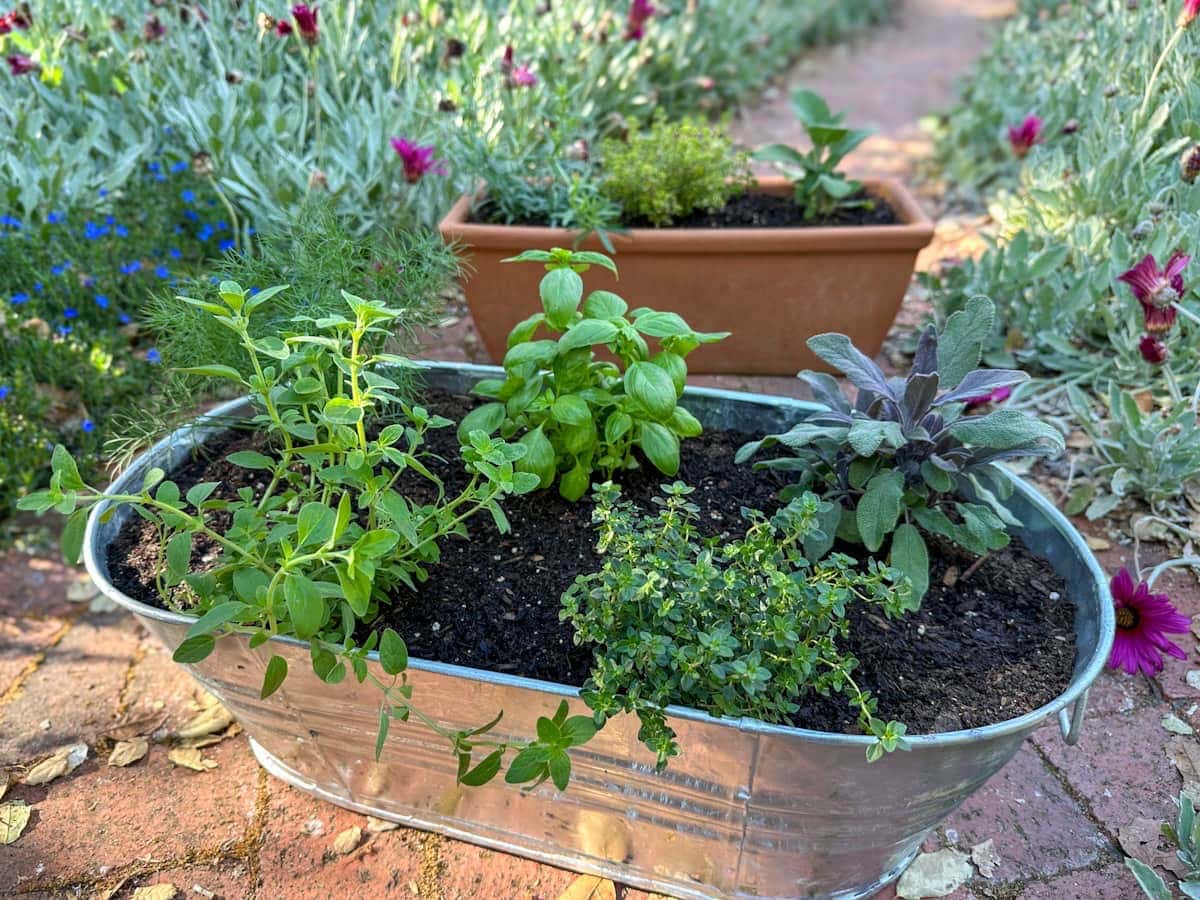
Design-forward container gardening herbs ideas
Make your herb space look as good as it tastes. Use height, color, and scent to build drama in small spots.
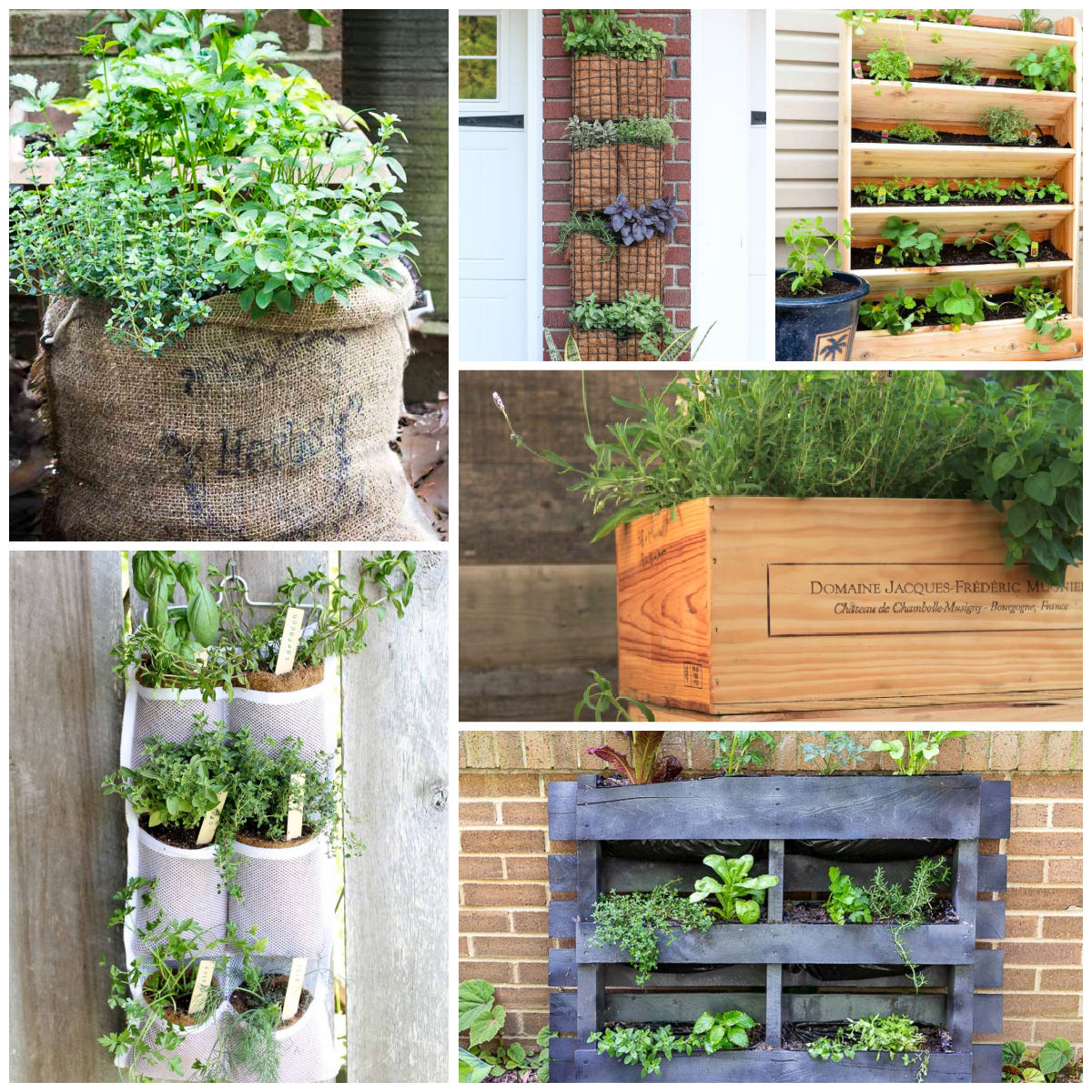
- Vertical ladder with pots: Stagger basil, thyme, and parsley for a green wall.
- Hanging baskets: Trailing thyme or oregano spill over edges. Add a compact chili in the center.
- Rail planters: Line a balcony with chives, dill, and cilantro for fast snips.
- Strawberry jars: Tuck thyme and trailing rosemary into side pockets.
- Upcycled wins: Colanders, tea tins, or wine crates work well if you drill drainage and line wood with plastic.
- Theme pots:
- Cocktail kit: Mint, basil, lemon verbena, and a dwarf lime nearby.
- Pho bowl: Thai basil, cilantro, mint, and sawtooth coriander.
- Roast blend: Rosemary, sage, thyme, and garlic chives.
- Sensory bin for kids: Fuzzy lamb’s ear with mint and sweet basil. Invite touch and smell.
Last summer I turned a beat-up ladder into a tiered herb bar. The top rung held rosemary in the wind. The middle had basil by the kitchen door. The bottom brimmed with mint for iced tea. It was cheap, neat, and high yield.
Weave these container gardening herbs ideas through your space and mix form with function.

Source: onsuttonplace.com
Step-by-step planting and a simple care calendar
Planting steps:
- Pick a pot with holes and the right size.
- Fill two-thirds with fluffy potting mix.
- Set the herb at the same depth as the nursery pot.
- Backfill, press lightly, and water slow until it drains.
- Add a label and place in bright light.
Easy care calendar:
- Spring: Plant, feed once, and trim first growth tips.
- Early summer: Water steady, harvest often, and pinch flowers on basil.
- Late summer: Shift pots for shade if leaves scorch. Light feed for leafy herbs.
- Fall: Harvest heavy. Dry or freeze extras. Move tender herbs indoors before frost.
- Winter: In mild zones, protect with frost cloth. Indoors, cut water and boost light.
This rhythm keeps your container gardening herbs ideas on track through the year.
Pests and problems made simple
- Aphids, whiteflies, or mites: Spray with water, then use insecticidal soap or neem. Treat in the evening to protect leaves.
- Slugs and snails: Hand-pick at dusk. Use copper tape on pot rims.
- Powdery mildew: Improve airflow, water at soil level, and remove infected leaves.
- Root rot: Check drainage. Repot into airy mix and water less often.
- Bolting in heat (cilantro, basil): Harvest more, give afternoon shade, and sow fresh seed every 3–4 weeks.
I once lost a mint pot to constant wet soil in a self-watering tub. I added perlite and opened the air vent. The plant bounced back in ten days. Small tweaks fix most issues fast.

Harvesting and using your herbs
Harvest in the cool morning for the best oils. Never take more than one-third of a plant at a time. Cut just above a leaf pair to spark bushy growth.
- Quick use: Tear basil into salads. Snip chives over eggs. Add thyme to roasted veg.
- Drying: Tie small bundles and hang in a dark, airy room. Store in jars once crisp.
- Freezing: Chop and freeze in olive oil cubes. Mint and basil also freeze as pesto.
- Bonus: Make herb butters, vinegars, or simple syrups for easy gifts.
These small habits turn your container gardening herbs ideas into daily flavor.
:max_bytes(150000):strip_icc()/GettyImages-468800015-e95e9995548044ef986baf35aea06bc0.jpg)
Budget and sustainable hacks
- Start from seed for cilantro, dill, and parsley. Sow thick and thin later.
- Take cuttings of basil, mint, rosemary, and thyme. Root in water, then pot up.
- Refresh tired soil by mixing in compost and perlite each season.
- Save rainwater. Herbs love soft water and you save on bills.
- Group thirsty herbs near the door. You will water them more often and waste less.
I grow a whole mint forest from two spring cuttings each year. It saves money and keeps mojitos fresh through fall.
Frequently Asked Questions of container gardening herbs ideas
How much sun do container herbs need?
Most herbs need 6–8 hours of direct sun. Indoors, use the brightest window or add a full-spectrum light.
How often should I water herb containers?
Water when the top inch feels dry. In heat, that may be daily; in cool weather, it could be twice a week.
Can I grow herbs indoors year-round?
Yes, with strong light and good airflow. Use a south window or LED lights for 12–14 hours per day.
What herbs grow well together in one pot?
Group by water needs. Basil with parsley works, while rosemary pairs better with thyme and oregano.
Why is my basil turning yellow?
It may be overwatered or underfed. Let soil dry a bit and add a light, balanced feed.
How do I keep mint from taking over?
Grow mint in its own pot. Trim often to keep it compact and tender.
What size pot is best for mixed herb planters?
Use at least 14–18 inches wide. Bigger pots stay moist longer and give roots room.
Conclusion
You now have the tools to turn tight spaces into a living spice rack. Choose the right pots, use a light mix, give strong light, and harvest often. Blend smart design with steady care, and your container gardening herbs ideas will shine.
Start with one pot this weekend. Plant a basil, a thyme, and a chive, and taste the change at dinner. If this guide helped, subscribe for more small-space garden tips, or share your favorite herb combo in the comments.